An environmentalist and prize-winning photographer, we were delighted when Jessica Crumpton came to talk to us at one of the community’s Coffee Mornings about Wildlife Photography on Gower. We were even more pleased when she kindly agreed to share her photographs to our online Nature & Wildlife Gallery. Jessica describes herself as a ‘retired conservation advisor and newcomer to Gower who loves wildlife.’ So here is a small selection of Jessica’s pictures from around Gower taken in the last year in her walks around the Gower Coast, from Burry Inlet to Rhossili, including the marshland, commons and cliffs.
Eider ducks

Eider ducks are endangered in Europe. The Eider ducks in Burry Inlet are in the most southern part of their range. They eat mussels and stay out in the water in winter forming rafts swimming close together.
Turnstones

Turnstones are often seen on the rockier parts of the shore at Burry Inlet in the winter. They turn stones over to find molluscs and crustaceans. A colourful winter visitor that breeds in the Arctic. In the UK these birds are Amber Listed for Conservation status.
Meadow Pipits
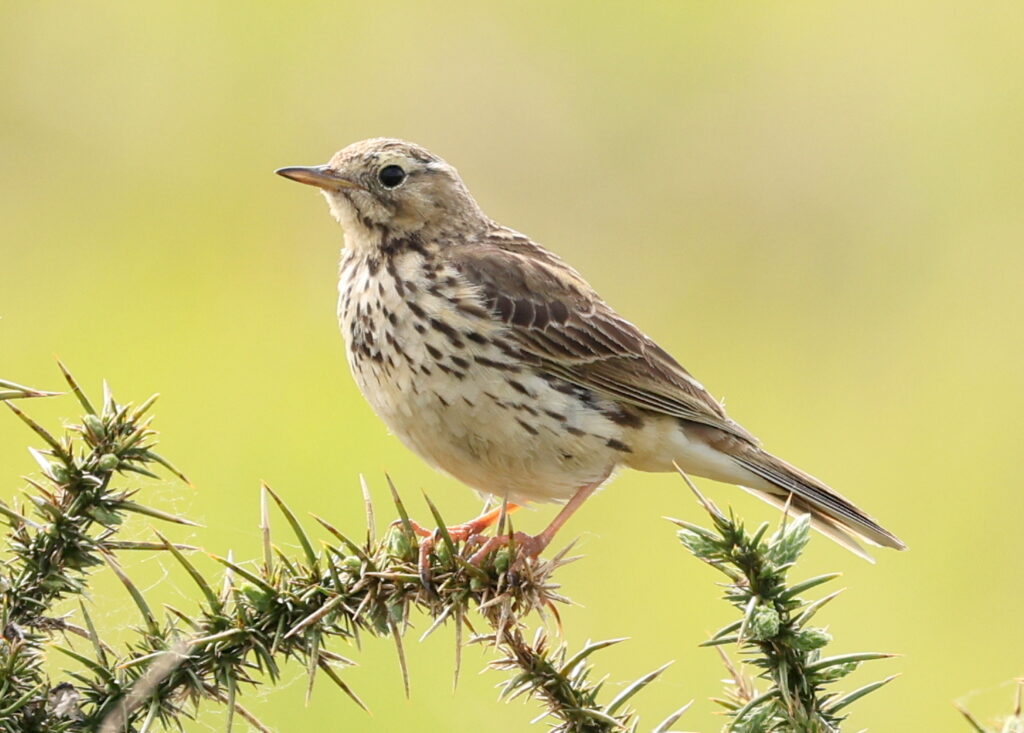
The Meadow pipit, like the stonechat, can often be seen sitting on the tops of gorse bushes on the Commons and cliff tops. They also frequent the salt marshes in north Gower. They nest on the ground and are one of the species in whose nest the cuckoo lays its egg.
Kestrels
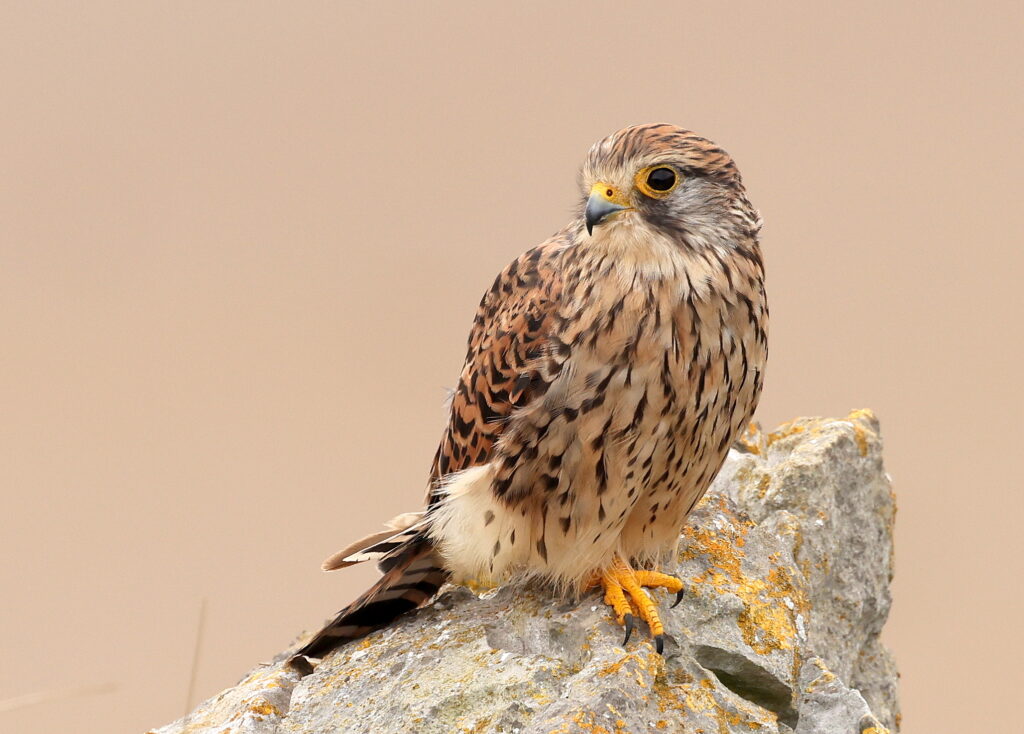
Kestrels can be found breeding on Gower with some on the Gower cliffs. These small predators will hunt for voles but will also take other prey such as lizards or moles. Often seen hovering, they like open land so that they can scan for prey.
Adders


Adder populations in the UK are declining and a recent study predicted they will become extinct in the UK in the next few years. On Gower you can see Adders in many dunes in sheltered spots in warmer months. They are protected by law and a shy creature that usually slithers away when disturbed. Try not to disturb sleeping snakes as they are trying to warm up to be able to hunt food especially when they have just come from a long winter.
Slow worms

Slow worms are legless lizards, harmless and have a shiny bronze colour. They are protected like all other UK reptiles under the Wildlife and Countryside Act. They like warm sheltered spots but unlike the adder, tend to warm indirectly under rocks. Slow worms eat slugs, snails and earthworms.
Green Hairstreak Butterfly

The Green Hairstreak is a tiny butterfly that although widespread is declining in the UK and not common anywhere. The caterpillars eat gorse broom and bilberry so the Commons are a good food source. They fly between April and June.
Yellowhammers

Yellowhammers or Melyn yr Eithin, yellow bird of the gorse, have declined rapidly in the UK and are on the Red List. It eats seeds and insects – seen above collecting food for its young. Conservation efforts at both the Nitten fields and the National Trust fields on the Vile where seed crops are planted for conservation reasons have helped these birds to nest and thrive on Gower.
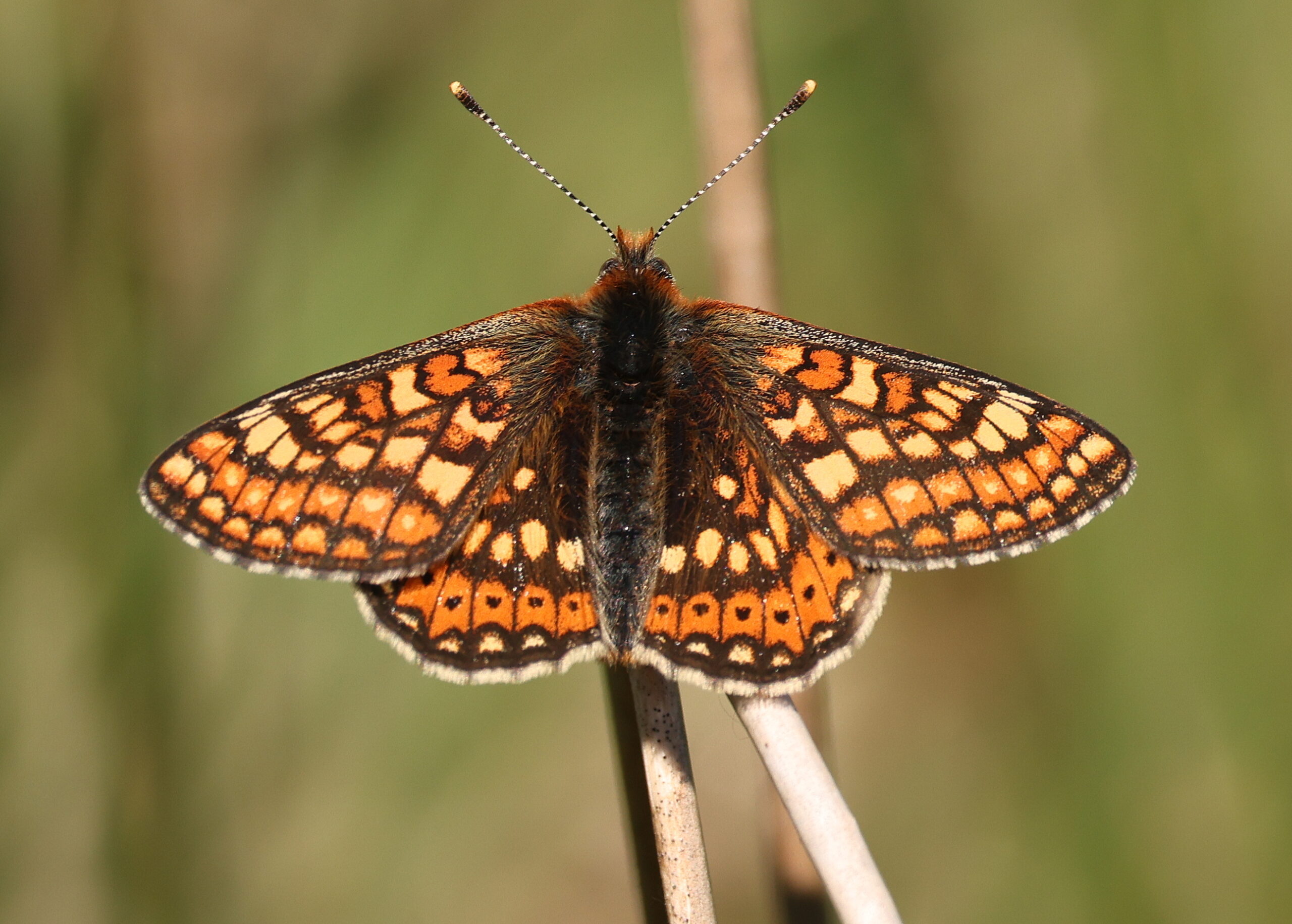
Marsh Fritillary Butterfly

The Marsh fritillary butterfly is threatened not only in the UK but also in Europe and there are conservation projects to try to protect the species. Its habitat is fragmented and populations are declining. The butterfly lays its eggs on the Devil’s-bit scabious plants and after hatching, the caterpillars spin larval webs of silk for basking and feeding. The population on Gower is monitored by the National Trust. It flies late May to early June.
Stonechats


Male (above left) and female (right) stonechats are about the size of a robin. These can be seen all year round on the Commons and cliff tops, on top of gorse bushes. Their call resembles the sound of stones being tapped together hence their name stonechat!
Choughs
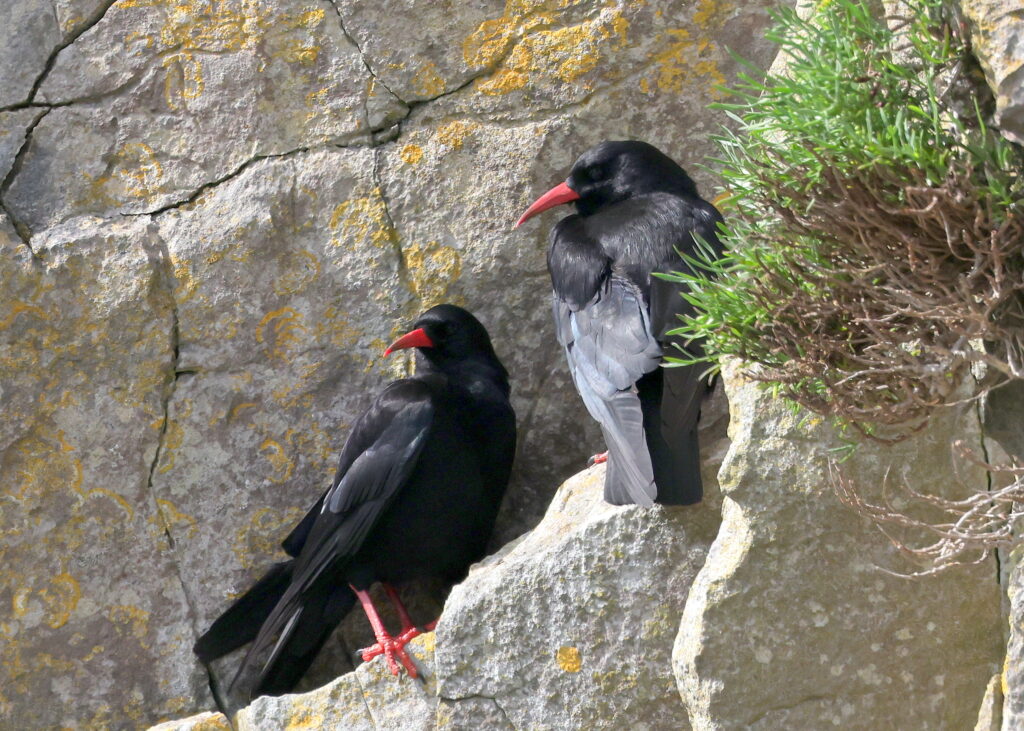
Choughs are rare birds in the UK with less than 400 breeding pairs. We are lucky to have them breed on the Gower cliffs. They eat grubs from shorter grass on hill tops using their long curved red beaks.
Grey seals
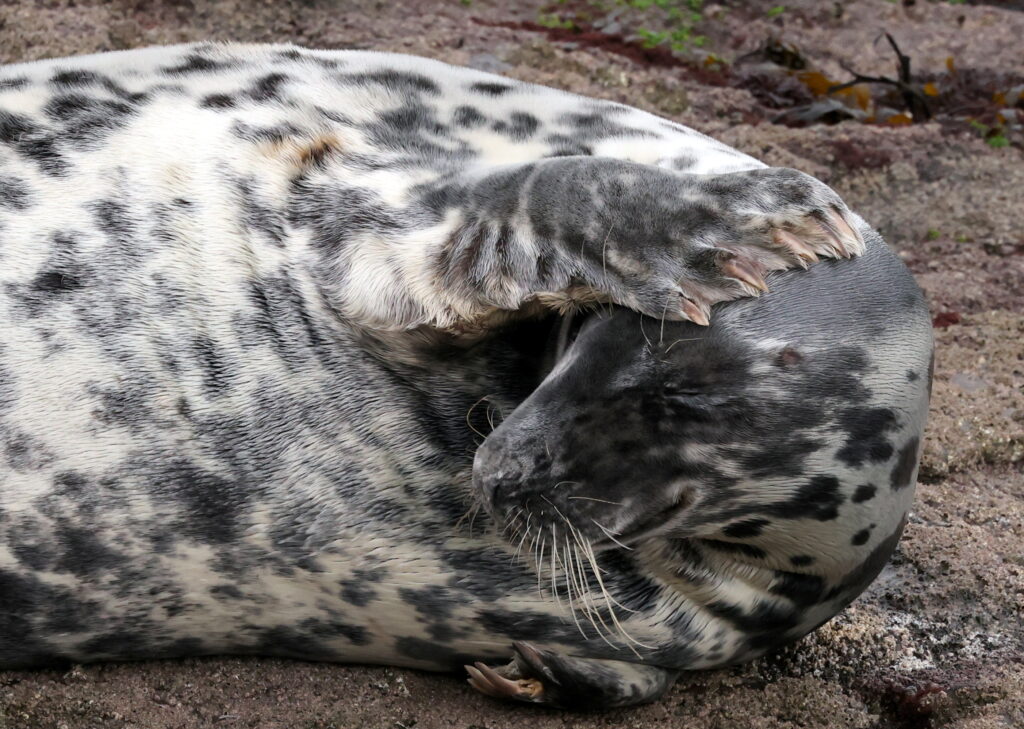
The grey seals can be seen around the Gower coast, especially around Worm’s Head. They are protected and are on the red list as endangered species. They are easily disturbed and should not be approached. Stay low, keep dogs away and allow seals to rest up on the rocks. If the seals are looking at you or moving away, you are disturbing them. Causing them to move across rocks rapidly can injure seals. Flying ring toys can also cause pain and suffering if they get caught around a seal’s neck.
Red kites

Red Kites used to be on the brink of extinction in the UK with just a few birds remaining in Wales. That fragile Welsh population was the source of the first UK conservation effort and provided the lifeline for reintroduction programmes in England and Scotland. These combined efforts have been successful and the UK now has an estimated 6000 breeding pairs. Red Kites can be seen over Gower, often feeding on carrion such as roadkill.
Jessica Crumpton
© All images Jessica Crumpton 2025