
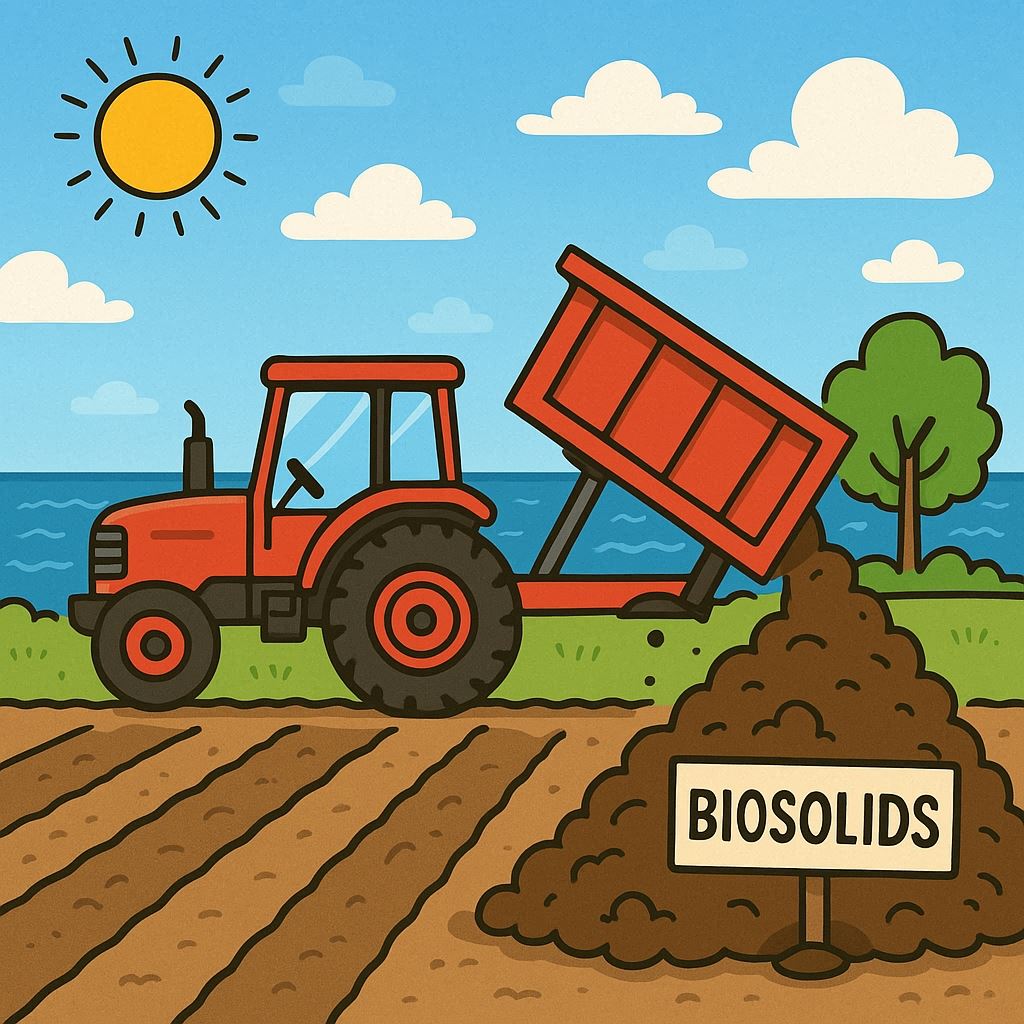
A Surprise in the Air
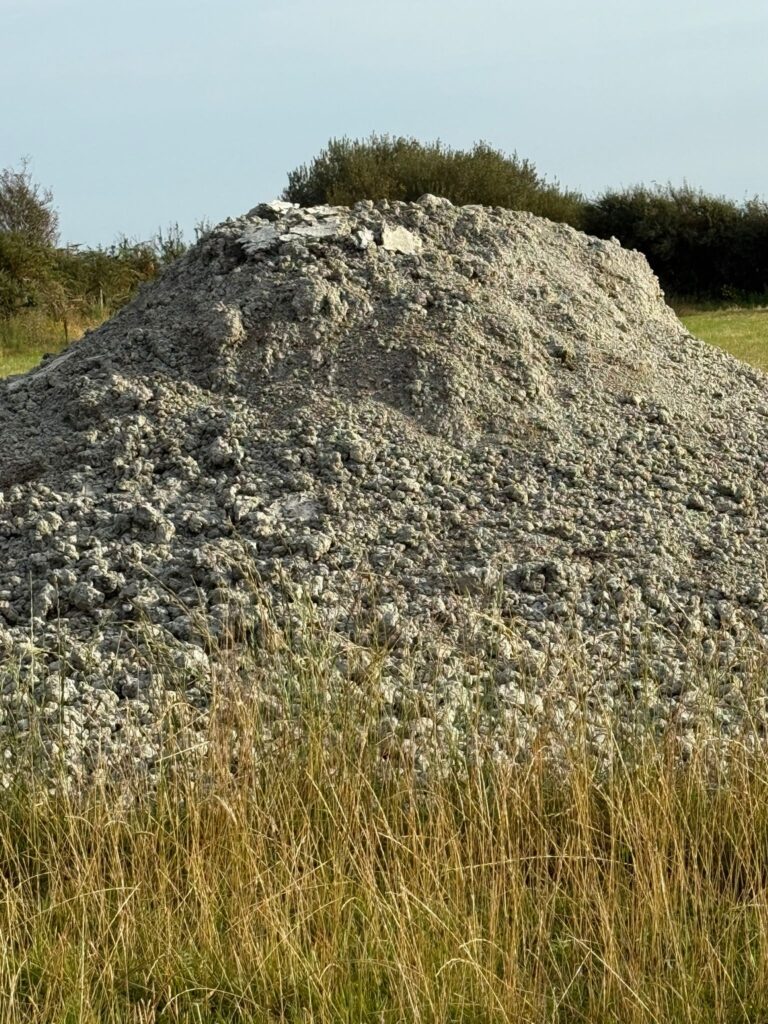
About six weeks ago, I was hit (quite literally) by a sudden and overpowering smell coming from a neighbouring field. Trucks were arriving, which began tipping piles of what looked like grey rubble along the field boundary. A fine dust lifted into the air. Within minutes, my eyes were watering, my throat was sore — and l felt distinctly unwell.
The culprit? Biosolids — treated human waste from sewage plants across South Wales, delivered by Welsh Water to a local farmer for use as fertiliser.
“It was the kind of smell you could taste,” said one neighbour.
While the smell lingered, so did the questions: What are biosolids, why are they used, and are there any rules? Fortunately, two well-informed Welsh Water representatives kindly visited to explain. Here’s what we learned.
From Flush to Field
Biosolids are the solid by-product of sewage treatment — not raw sewage, but material that’s been digested, dried, and stabilised through anaerobic digestion. This process breaks down organic matter in heated, sealed tanks, killing pathogens, reducing odour, and producing a dry, crumbly, fertiliser-like material.
The biosolids delivered here had also been treated with lime, after E. coli was detected at one source plant. This raises the pH for extra safety — but also makes the smell significantly worse.
Use of biosolids is regulated under the Biosolids Assurance Scheme (BAS), with strict controls on quality, storage, and application. And no — they’re not dumped willy-nilly, delivered under cover of darkness. The system is above board, audited, and regulated.
Myths and Misunderstandings
Biosolids often arrive with a large side order of rumour. Here are a few common myths:
- “It’s raw sewage.”
No. It’s treated through multiple steps. What’s spread is dry and stabilised — not straight from the drain. - “It’s full of heavy metals.”
Not under today’s regulations. The BAS sets strict safety limits for contaminants. - “It’s all toilet paper and waste.”
Not quite. The solids are separated, processed, and made safe. It’s not what you flushed last week.
In short, biosolids are not toxic, not raw, and not secretly dumped. They’re widely used across the UK — particularly on land that needs rebuilding after years of overgrazing or nutrient loss.
Fertiliser With a Future
One key advantage of biosolids is their slow-release nutrient profile. The nitrogen, phosphorus and potassium they contain are less soluble than in many artificial fertilisers or manure. That means:
- Nutrients stay in the soil longer
- There’s less runoff into watercourses
- The soil structure improves over time
The field in question had poor-quality grazing land with acidic soil and poor grass growth. Biosolids were used to improve fertility and support better livestock nutrition — something that benefits both farmer and animal.
From an environmental perspective, biosolids are also a low-carbon alternative to synthetic fertilisers, which are energy-intensive to manufacture.
What Are the Rules?
Use of biosolids is closely regulated. Some key points:

- Proximity: They can’t be spread near homes, watercourses or public paths*
- Timing: Usage depends on land and crop type (grassland vs arable)
- Storage: Biosolids can be stockpiled on fields for up to 12 months
- Ploughing: On pasture, they don’t need to be ploughed in immediately, but should be worked in when practical
- Grassland practice: Grass should be cut before spreading to ensure good contact and avoid grazing too soon.
Regulation is overseen by the BAS, Environment Agency and Natural Resources Wales.
What Can We Do?
If you’re concerned about biosolids in nearby fields, it’s reasonable to seek reassurance:
- Talk to the landowner or farmer
- Contact Welsh Water, who were open and helpful locally
- Raise concerns with Rhossili Community Council or Natural Resources Wales.
And finally — while the smell may take us by surprise, it usually fades within a few days. Though in my case, the lime treatment has ensured it lingers… memorably.
For more information visit: https://www.dwrcymru.com/en/our-services/wastewater/biosolids-for-agriculture and download the booklet Biosolids which provides full details of issues discussed here.
The current piles have been placed too close to adjoining hedge lines and one pile is blocking a footpath – both errors acknowledged by Welsh Water